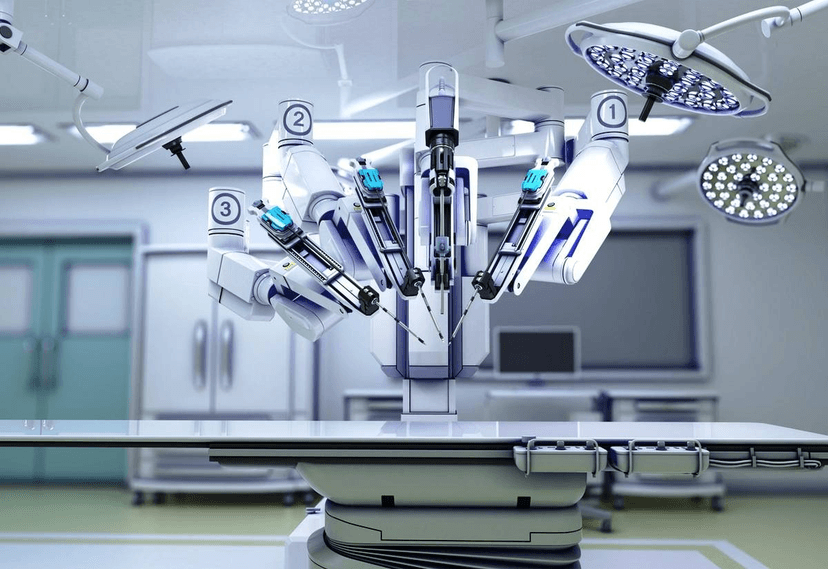
Robot-Assisted Surgery — precision at a new level
At our clinic, robot-assisted procedures are performed under the surgeon's full control using a robotic surgical system. The technology provides a magnified 3D view of the surgical field and highly precise instrument movement. A minimally invasive approach can reduce tissue trauma and, in some cases, support a more comfortable postoperative recovery. The robot does not operate independently: the surgeon controls every movement of the system.
When robot-assisted surgery is used
Robotic technology may be used in surgical treatment across various specialties. A surgeon determines whether this approach is suitable for each patient after an examination.
What is robot-assisted surgery?
A surgeon's hands cannot always reach hard-to-access anatomical areas and are limited in mobility. Robot-assisted surgery solves this problem.
3D visualization with 10–20× magnification
The surgeon views the surgical field in a three-dimensional image with 10–20× magnification, allowing clear assessment of tissue depth and structure.
Manipulators with 7 degrees of freedom
Instruments rotate 360° and move in 7 directions, providing access to even the most complex anatomical zones.
Minimal blood loss
High precision of movements reduces tissue trauma and significantly decreases blood loss during the procedure.
Rapid recovery
The minimally invasive approach enables faster patient recovery and shorter hospitalization periods.
Benefits for the patient
Robot-assisted surgery provides maximum precision, safety, and high effectiveness of surgical intervention.
Maximum precision
The system filters the surgeon's hand tremor, providing movements accurate to fractions of a millimeter even in hard-to-reach areas.
Fewer incisions
Small punctures instead of large incisions — fewer scars, less post-operative pain, and more aesthetically pleasing results.
Short hospitalization
Most patients are discharged within 1–2 days after surgery instead of 5–7 days with traditional open surgery.
Fewer medications
Reduced tissue trauma decreases the need for pain relievers and antibiotics in the post-operative period.
Fewer complications
High precision of manipulation and minimal tissue contact reduce the risk of post-operative complications.
Faster return to normal life
Patients return to normal activities faster — on average 2–3 times faster than after open surgeries.
How does a robot-assisted operation proceed?
The robot-assisted surgical process is strictly structured and performed under complete surgeon control at every stage.
Pre-operative preparation
The patient undergoes a complete examination. The surgeon plans the operation in detail, accounting for anatomical features.
Anesthesia and preparation
Anesthesia is administered to the patient. Small 0.5–1 cm punctures are made for insertion of robotic instruments.
Surgeon controls the robot
The surgeon sits at a control console. Their movements are transmitted to the robot's manipulators at a 1:1 or reduced scale, with tremor filtering.
Operation execution
The operation is performed with 3D field visualization. The surgeon works with high detail impossible to achieve with traditional methods.
Completion and recovery
Instruments are withdrawn, punctures are closed. The patient is transferred to the ward and typically feels significantly better the next day.
🤖 The robot is fully controlled by the surgeon — it only enhances the doctor's precision and capabilities, but does not act autonomously.
Book a consultation
Find out if robot-assisted surgery is right for you. Our surgeons will answer all your questions and create a treatment plan.
- ✓Consultation with a surgeon trained in robotic technologies
- ✓Assessment of indications and contraindications for surgery
- ✓Transparent cost and preparation plan
Our manager will contact you within one business day